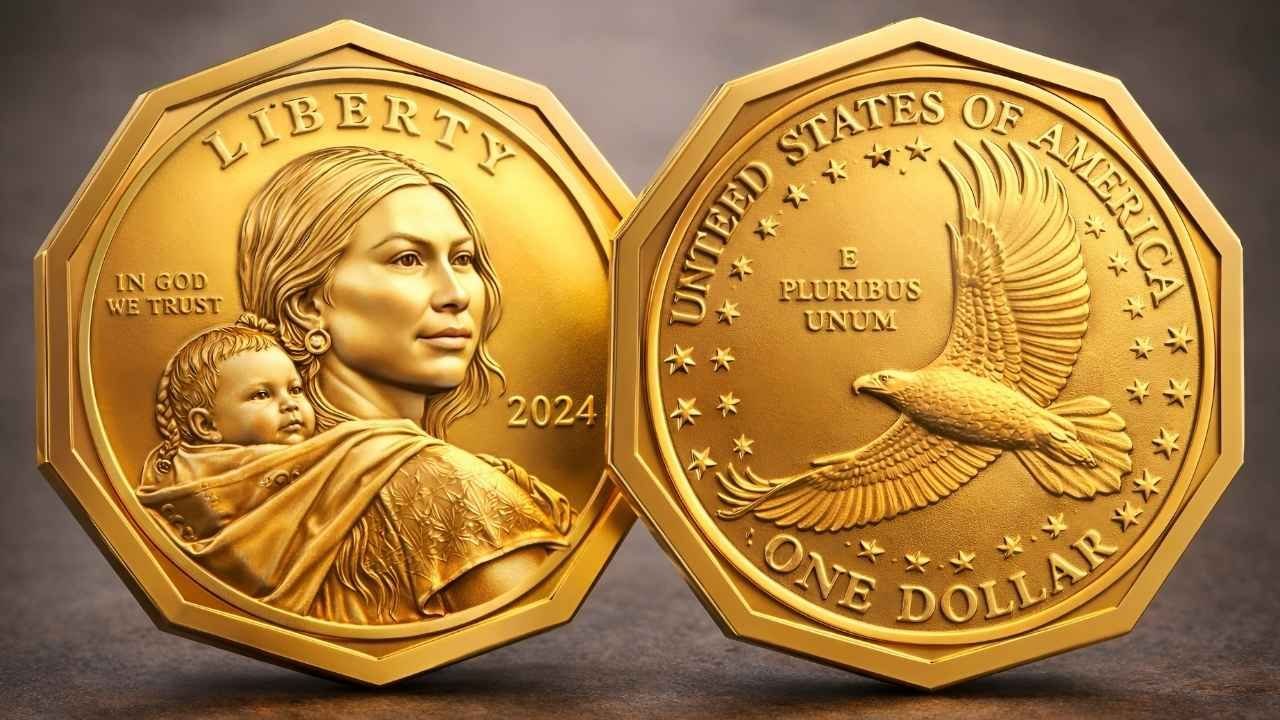
It sounds unbelievable, but a few rare versions of the 2000 Sacagawea Dollar have sold for astonishing prices. While most are worth only face value, specific varieties, mint errors, and high-grade examples have become serious collector prizes in 2026.
Before assuming you’ve hit the jackpot, here’s what you need to know.
Meet the 2000 Sacagawea Dollar
Introduced in 2000, the Sacagawea Dollar replaced the Susan B. Anthony dollar. Its golden color comes from a manganese-brass outer layer bonded to a copper core.
Key features:
- Obverse: Sacagawea carrying her infant son
- Reverse (2000 design): Soaring eagle
- Minted in large numbers in Philadelphia and Denver
Hundreds of millions were produced — meaning most examples are common. However, certain early varieties and rare mint mistakes changed everything.
The Famous “Cheerios” Prototype Dollar
Cheerios Sacagawea Dollar
In early 2000, General Mills placed newly minted Sacagawea Dollars inside select Cheerios cereal boxes as part of a promotion.
Years later, collectors discovered that some of these coins featured enhanced tail feather details on the eagle. These were early prototype versions not intended for general circulation.
Why It’s Valuable
- Limited number released
- Unique enhanced feather design
- Strong collector demand
- High-grade examples are extremely rare
Authenticated specimens in top condition have reached impressive auction prices — sometimes approaching five figures and beyond in elite grades.
Enhanced Tail Feather Variety
The key difference lies in the eagle’s tail feathers.
How to identify it:
- Sharper, more detailed feather lines
- Visible under magnification
- Requires side-by-side comparison
Because the differences are subtle, professional grading is essential. Counterfeit claims have increased as prices climbed.
Rare Mint Errors That Boost Value
Beyond promotional varieties, mint errors can dramatically increase value.
Common Error Types
- Off-center strikes
- Double strikes
- Struck on wrong planchet
- Broadstrikes
Coins struck on incorrect metal planchets may look thinner or have unusual color and weight differences.
Certified dramatic errors can bring thousands — sometimes much more depending on rarity and condition.
The Legendary Mule Error
Sacagawea Dollar–Washington Quarter Mule
One of the most famous modern U.S. mint mistakes combined:
- Sacagawea Dollar obverse
- Washington quarter reverse
Only a few of these mule errors were discovered. They quickly became legendary and have sold for extremely high prices.
This is the type of coin that can reach six-figure territory under the right conditions — though it is extraordinarily rare.
Why Condition Matters So Much
In modern coins, condition often determines price.
Coins graded:
- MS69 or MS70 (near-perfect condition)
- With original luster
- No visible marks
Can sell for significantly more than average uncirculated coins.
Even tiny scratches can reduce value dramatically.
Quick Value Overview
| Variety | Rarity Level | Potential Value |
|---|---|---|
| Regular 2000 circulation coin | Very common | $1 |
| Cheerios prototype (certified) | Rare | Thousands+ |
| Major mint errors | Scarce | Varies widely |
| Mule error | Extremely rare | High five to six figures |
Are $94,000 Claims Realistic?
A $94,000 sale would require:
- An extremely rare variety
- Elite mint-state grade
- Strong auction demand
- Professional certification
Most circulated 2000 Sacagawea Dollars are worth exactly one dollar. Hype online often exaggerates value.
How to Check Your Coin
- Examine tail feathers carefully
- Check weight and thickness
- Look for obvious strike errors
- Avoid cleaning or polishing
- Submit unusual coins to a reputable grading service
Professional authentication protects you from overestimating value.
FAQs About the 2000 Sacagawea Dollar
1. Is every 2000 Sacagawea Dollar valuable?
No. The vast majority are worth face value.
2. How do I know if I have a Cheerios version?
You must compare tail feather details and get professional certification.
3. What is a mule error?
A mule error occurs when two mismatched coin dies are accidentally paired during minting.
4. Should I clean my coin before selling?
Never. Cleaning reduces value significantly.
5. Where can I verify my coin?
Submit it to a respected coin grading service or consult a reputable dealer.
Final Thoughts
The 2000 Sacagawea Dollar remains one of the most exciting modern U.S. coins. While most examples are ordinary, rare prototypes, dramatic mint errors, and elite-grade specimens prove that modern coins can achieve extraordinary prices.
If you find a 2000 golden dollar, take a closer look — but stay realistic. Research carefully, avoid cleaning, and seek professional authentication. Even if your coin turns out to be common, the thrill of the hunt is part of what makes coin collecting so rewarding.