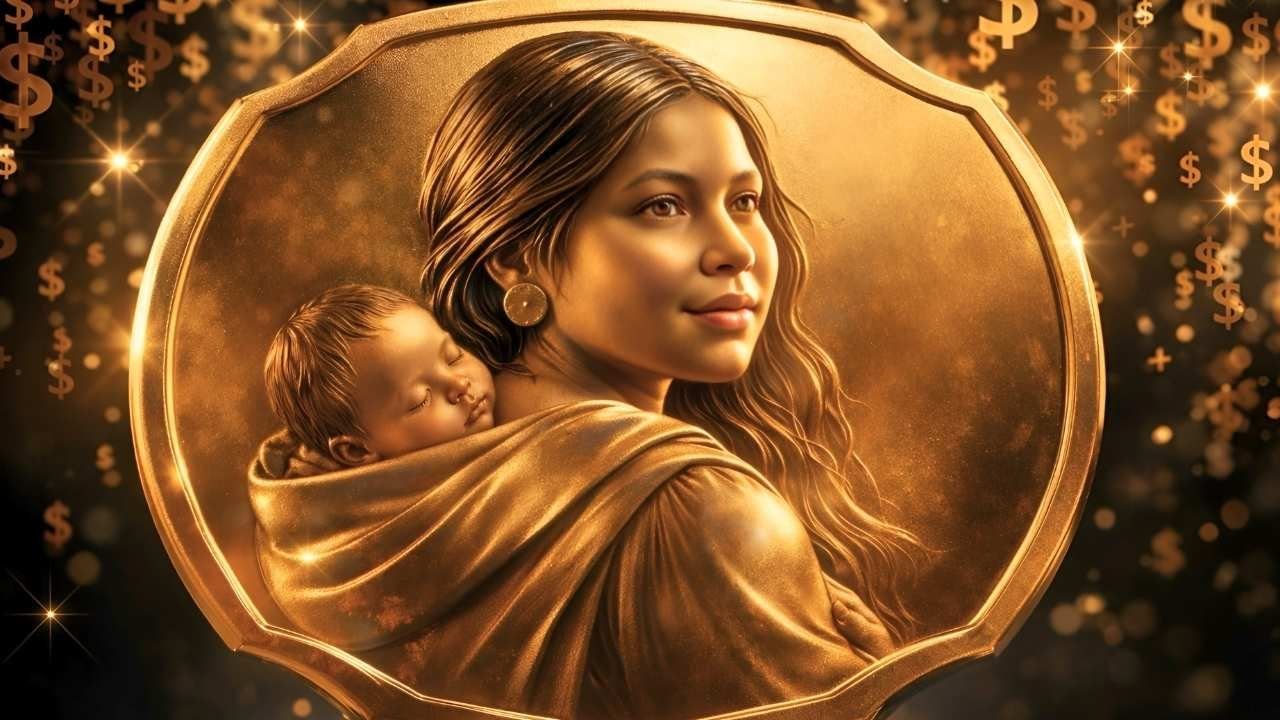
When the golden 2000 Sacagawea Dollar debuted at the start of the new millennium, it was meant to revive interest in dollar coins. While it never became widely used in everyday transactions, it quietly became a favorite among collectors. Today, certain rare errors and high-grade examples of this coin are worth far more than $1.
If you own a 2000 Sacagawea Dollar, here’s what you need to know.
A Modern Dollar with Historic Design
The Sacagawea dollar replaced the Susan B. Anthony dollar and featured a bold golden color to stand out from quarters.
Key Design Details
- Obverse: Sacagawea carrying her son Jean Baptiste
- Reverse (2000 only): Soaring eagle
- Composition: Manganese-brass outer layer over copper core
- Mint Marks: P (Philadelphia), D (Denver), S (San Francisco proof)
While most circulated examples remain worth face value, specific varieties can sell for hundreds—or even thousands—of dollars.
Why Condition Matters
Condition plays a huge role in value.
Dollar coins are large and easily scratched, so high-grade examples are scarce.
| Grade | Potential Value |
|---|---|
| Circulated | $1 |
| MS65 | Small premium |
| MS67–MS68 | Hundreds to thousands |
Coins graded by professional services in Mint State (MS) condition bring the strongest prices, especially those with clean surfaces and strong luster.
The Famous “Cheerios Dollar”
One of the most valuable 2000 varieties is the Cheerios Dollar.
What Makes It Special?
In early 2000, 5,500 Sacagawea Dollars were placed inside Cheerios cereal boxes as part of a promotion. These coins feature enhanced eagle tail feathers on the reverse — a detail not found on regular circulation strikes.
High-grade examples have sold for several thousand dollars, making them one of the most sought-after modern U.S. coins.
The “Wounded Eagle” Error
Another popular variety is the Wounded Eagle Sacagawea dollar.
How to Identify It
- A raised line appears across the eagle’s belly
- Looks like a spear or scratch
- Caused by a die gouge at the Mint
Depending on condition, this error can sell for hundreds of dollars or more.
The Rare Mule Error
The most shocking mistake is the 2000 Sacagawea dollar mule error.
What Happened?
A small number of coins were struck with:
- Sacagawea obverse
- Washington State Quarter reverse
This hybrid coin was never meant to exist. Only a few are known, and auction prices have reached tens of thousands of dollars.
Other Valuable 2000 Errors
Collectors also look for:
Off-Center Strikes
- Part of the design is missing
- More valuable if the full date is visible
Planchet Errors
- Missing clad layers
- Unusual color or texture
- Wrong planchet strikes
Because these errors are rare, authenticated examples often command strong premiums.
Proof Coins Can Be Valuable Too
The San Francisco Mint produced proof versions for collectors.
Proof coins feature:
- Mirror-like backgrounds
- Frosted design elements
While common proofs aren’t extremely rare, PR69 or PR70 deep cameo examples can sell for higher prices.
How to Check Your 2000 Sacagawea Dollar
Follow this quick checklist:
- Look below the date for the mint mark
- Inspect eagle tail feathers carefully
- Check the eagle’s belly for raised lines
- Look for design misalignment
- Avoid cleaning the coin
If you suspect an error, professional grading is highly recommended.
FAQs About 2000 Sacagawea Dollar Value
1. Are all 2000 Sacagawea Dollars valuable?
No. Most circulated coins are worth only $1.
2. How much is a Cheerios Dollar worth?
High-grade authenticated examples can sell for several thousand dollars.
3. What is the rarest 2000 Sacagawea error?
The mule error is the rarest and can sell for tens of thousands.
4. How do I know if mine is a Wounded Eagle?
Look for a raised die gouge across the eagle’s belly on the reverse.
5. Should I get my coin graded?
Yes, especially if you believe it’s an error or in high Mint State condition.
Final Thoughts: A Golden Opportunity?
The 2000 Sacagawea Dollar may look like an ordinary golden coin, but hidden among millions are rare varieties worth serious money. From the Cheerios Dollar to the legendary mule error, these modern coins continue to surprise collectors.
Take a few minutes to inspect your coins carefully. That golden dollar in your drawer might be worth far more than you think.